Tel: +44 (0)1934 713763
Email: enquiries@exploraudio.com

 Shopping Cart: (empty)
Total: £0.00
Freedom of expression

InstruMounts (H-clamp)
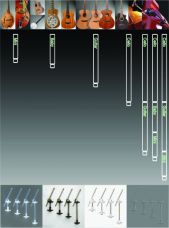
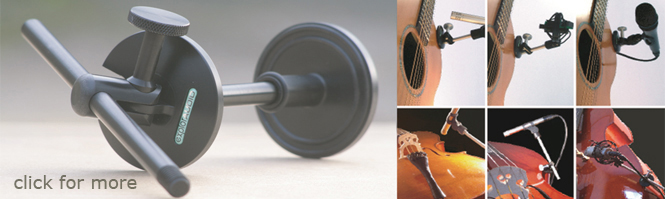
H-clamp InstruMounts allow almost any microphone to be attached safely and securely to almost any stringed instrument. They can also be attached to other instruments and sound equipment or even to furniture, square profile columns or beams. The standard models are designed to fit individual 'classes' of instruments (such as guitars, cellos or basses) but a package is also available to cover the entire range. To find the right H-clamp for you, simply pick the relevant (or closest match) class of instrument and check that the body depths (front to back) of your instrument(s) are within the ranges shown. If not, take a look at the adjustment ranges for the other models. If in doubt, the Multi-Instrument H-clamp covers most eventualities but please contact us for advice if you are still unsure or if you have a more unusual application in mind. Don't worry if you make a mistake with the size, your H-camp can be adapted easily to fit at any time.
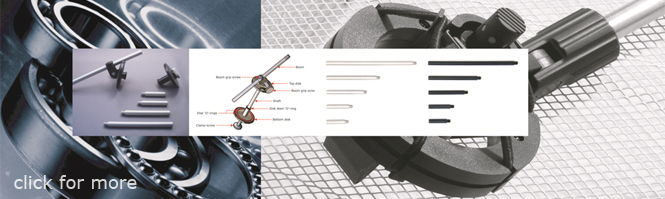
The H-clamp is a novel development of the traditional design of instrument maker's cramps, which are used during construction of the body to hold the panels together tightly while the glue sets. Adding a boom to the cramp allows almost any microphone (or other audio device or accessory that can be mounted on a microphone stand) to be attached securely without damaging the instrument or affecting its tonal quality. Aerospace-class materials and manufacturing techniques produce a light, rigid and robust mount for microphones up to at least 500g in weight. The potential applications are limitless and include less obvious uses such as mounting vocal microphones on guitars to dispense with microphone stands. View a selection of applications under the headings "Stage" and 'Studio".


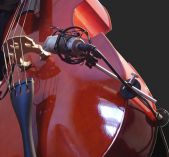
Bass Mount: standard double (upright) bass
LiveBass H-clamp 'Standard': InstruMounts to fit most 'standard' Double (Upright) Basses. The LiveBass H-clamp 'Standard' model has an adjustment range of 198mm to 228mm and will fit the bodies ...


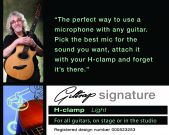
Giltrap Signature H-clamp
The ultimate guitarist's H-clamp, the Giltrap Siganture H-clamp has an adjustment range tailored to cover everything from elecrtic and semi-electric to the largest jumbo or acoustic bass guitars. Gordon Giltrap is ...
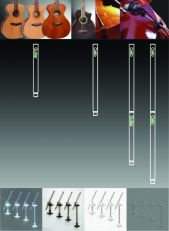
Bass Mount: extended adjustment range
LiveBass H-clamp 'Plus': InstruMounts to fit all Double (Upright) Basses. The LiveBass H-clamp 'Plus' model has a Double (Upright) Bass adjustment range of 195mm to 258mm. LiveBass 'Plus' ca...
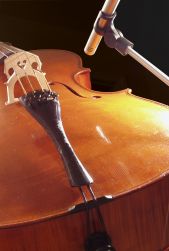
Cello & ABG Mount: cellos and acoustic bass guitars
LiveCello H-clamp: InstruMounts to fit Cello, Acoustic Bass and other large bodied guitars. The LiveCello H-clamp model has an adjustment range of 114mm to 144mm and should fit any of the above instruments. If...
Guitar Mount: standard acoustic guitars
LiveGuitar H-clamp 'Standard": InstruMounts to fit most 'standard' acoustic guitars. The LveGuitar H-clamp has an adjustment range of 84mm to 116mm to fit the bodies of guitars from classical to d...
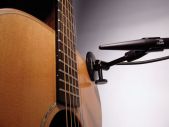
Guitar Mount: baby and resonator guitars
LiveGuitar H-clamp 'Baby": InstruMounts to fit smaller than 'standard' Acoustic Guitars, most Ukuleles, Open-Backed Banjos and some Semi-electric Guitars. The LveGuitar H-clamp 'Baby' has an ad...
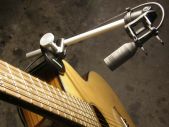
Guitar Mount: extended adjustment range
LiveGuitar H-clamp 'Plus': InstruMounts to fit all Acoustic Guitars, from Baby and Resonators to Acoustic Bass (ABG). The LiveGuitar H-clamp 'Plus' model has an Acoustic Guitar adjustment range of 52mm ...
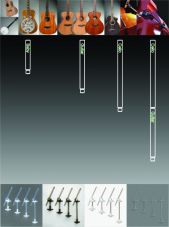
Mini Mount: mandolin, ukulele, banjo, electric guitar
LiveMount Mini H-clamp: InstruMounts to fit instruments with shallower bodies than Baby Acoustic Guitars. The LveMount Mini H-clamp has an adjustment range of 43mm to 76mm to fit the bodies of instruments such as Mando...
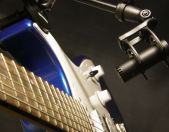
Multi-instrument Mount: from 'Mini' to beyond 'Bass'
LiveMount Standard Multi-instrument H-clamp: InstruMounts to fit everything from most Mandolins, Banjos and Electric Giutars to Double (Upright) Basses and beyond. The LiveMount Standard Muti-instrument H-clamp model h...